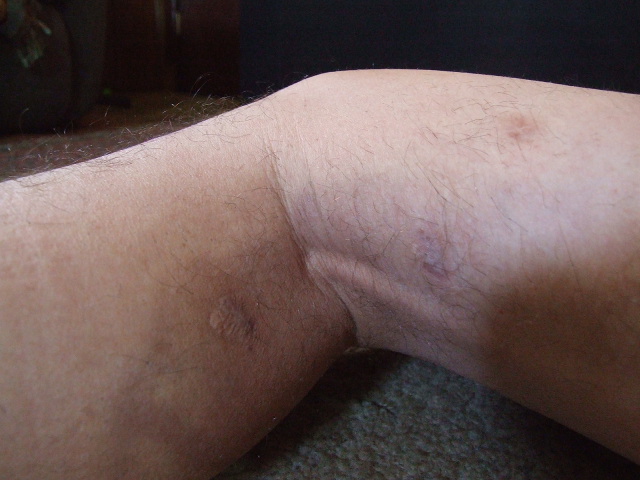
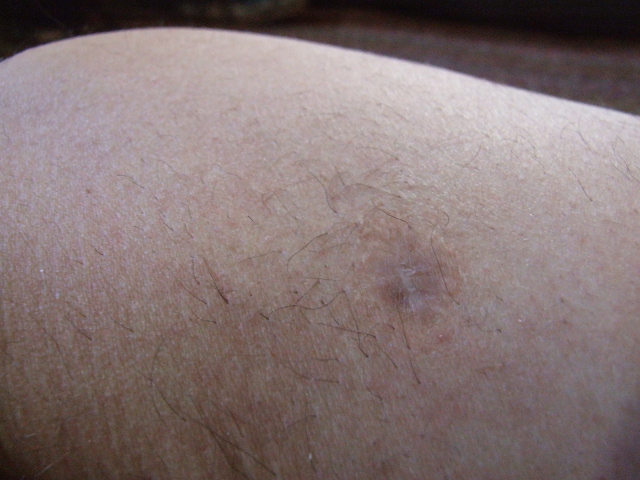
8-01-08 It might be my imagination, but my leg seems to be weaker and tire more easily since I've had my angiogram. It's really noticeable in my ankle - the muscles that move the front of my foot up and down are weaker. I guess I should have done the physical therapy. We couldn't do it until after my surgery was done and healed, then I had to get back to work. I also get pretty sharp pains in specific places on my lower leg. I'm going for another Doppler test to check my arterial bypass on the 29th. I assume that I'll find out then when I'll need to get one last CT Arteriogram to verify that the fistula has been fixed.
9-04-08 I went and got my Doppler test done. It came out very well, my circulation was just as good in my injured leg as it is in my left leg. The technician could not find any sign of the fistula. Nothing was said about getting another CT Ateriogram, so I don't know if I'll get another one of those or not. I don't see any hope that the nerves will ever grow back. The nerve was severed about halfway between my knee and the bottom of my foot, so that is a LOT of nerve to grow. I look at my numb foot as a constant reminder to follow the the gun safety rules.
9-15-08 Good news on two fronts today. The surgeon's called today. Since there was no sign of the fistula on my last Doppler, I can wait a year for another one and they aren't going to do another CT Arteriogram. I had been scheduled to have a Doppler test every three months to check the arterial bypass. The Postal Service also is offering Voluntary Early Retirements. I plan on taking them up on the offer. It will be another month before I get the paperwork and sometime in January before I get their final answer. I don't expect anything will go wrong, at least I hope it all goes through. February 28th will be my last day. I'll be getting out 20 months early. My wife and I can't wait! Only 107 scheduled working days left.
11-01-08 Good news / bad news. The bad news: My foot seems to be bothering me more now than it has for quire a while. Mostly my big toe. Any shoes I wear seem to crease right above it and so the shoe presses down on the bottom of my toe. I've tried several different types of shoes and have tried on more pair than I could count without much success. Different shoes hurt other parts of my foot, too. I change shoes in order to spread the pain around. Now the good news. I applied for the early out. February 28,2009 is the official date, but I think (and hope) that they will let me go on December 31,2008. This will get me out more than 21 months early. Hopefully when I'm not walking all day my foot will settle down.
12-24-08 I am done working. My last day was the 18th, I'm on vacation until 12-31 when my retirement becomes official. I can't tell you what a relief that is. My foot feels much better now. I got out 22 months early and am taking about a 2% penalty. I'll also lose 10% of my retirement savings, but I don't care. I got out just in time, too. They are adjusting routes. If I stayed I'd lose one street and an apartment complex and pick up a half of another route which involves walking up and down a LOT of steps. I can only imagine how much more my foot would hurt after doing that every day. Life is good and I'm kicking around the idea of trying an IDPA match next spring. I'm practicing draws in slow motion and doing a lot of dry firing. Of course I make sure there is no live ammo in the room, I use a different pistol and holster than I normally carry and I aim in the safest direction possible. I also wait at least an hour after I put away the dry fire pistol and holster before I retrieve my carry pistol and holster. I want to make sure I'm out of the "dryfire mindset" before I touch a loaded pistol. I'm trying to build "muscle memory" so that later I can work up the speed without sacrificing safety.
01-19-09 This evening marks exactly one year since I had my
negligent discharge injury. I refuse to call it an anniversary, because
anniversaries are something you celebrate and celebrating it is the last thing I
would do. It's weird how many times things
came out 180 degrees from what I expected. The night it happened I figured I had
four holes in my leg, they'd take a few weeks to heal and I'd be back to normal.
Then the thing about my fistula popped up. The surgeon said most repaired
themselves
within three months, it wasn't much to worry about. I also had the numbness on
the bottom of my foot to deal with. Then the pseudo aneurysm occurred. That's
when I really got worried. Think about it. The bullet somehow fused a pretty
large artery
and a pretty large vein together so that blood got diverted. It was bad enough
worrying about that leaking or coming apart. Then the pseudo aneurysm was a lot
worse. The vein and/or artery wall was weak or thin enough to balloon out. The
thing was HUGE.
Even though I never wrote about it here or mentioned it to my family I was
really worried that it would burst and I might bleed to death. I think this was
sort of similar to aneurysms that occur in the Aorta. These are fatal, of course
and is how John Ritter died.
Anyhow, after by arterial bypass surgery, they cut off the major blood flow to
it, but there were several smaller ones still feeding it. I also knew that the
more I walked the faster that new veins would grow to help replace the one they
took out. It doesn't
take a rocket scientist to figure out what would happen. It did, and so I needed
the invasive angiogram. Finally I got the blood vessels fixed. Now all I had to
worry about was the nerve. I don't think it will ever get better, but since I've
retired it doesn't
bother me nearly as much as it did when I was walking all day. I notice the
numbness every day and deal with some localized pain every day. It's there all
of the time, but I try to ignore it like I do the tinnitus - ringing in my ears.
It's always
there but hopefully I can ignore it as much as possible.
Having said all that, I DO have things to celebrate. I'm alive. I can walk. I
can even walk without crutches or other help. I live every day largely pain
free. We survived it financially. I don't see any major setbacks down the road.
Hopefully others have learned
from my mistake. And finally, I got to retire early (although it wasn't related
to my injury) and I get to spend what I hope are many, many years at home with
my dear sweet wife, Candy. Our daughter, son-in-law and grandson are healthy.
Life is good.
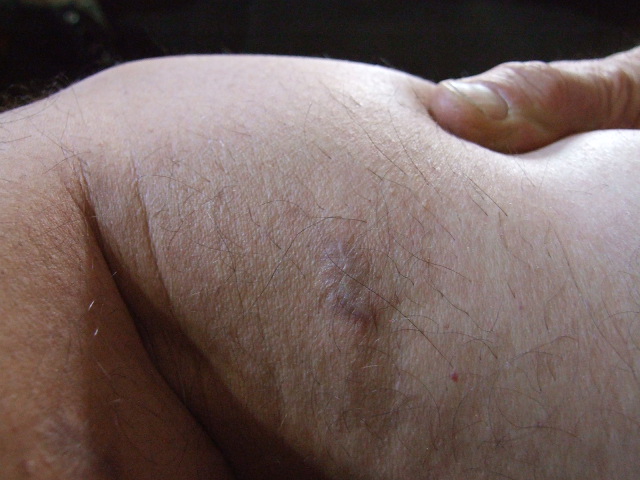
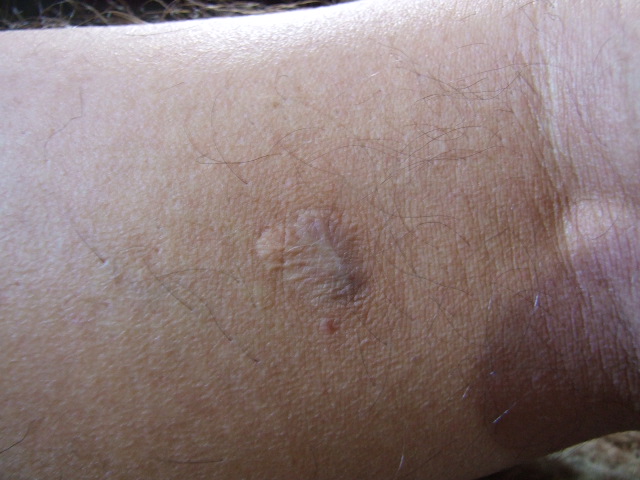
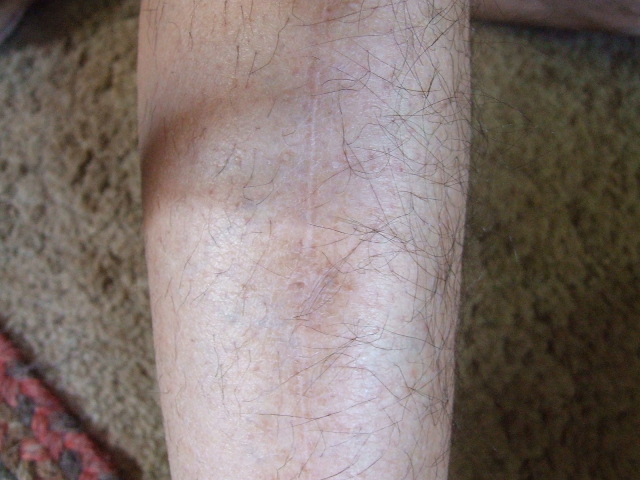
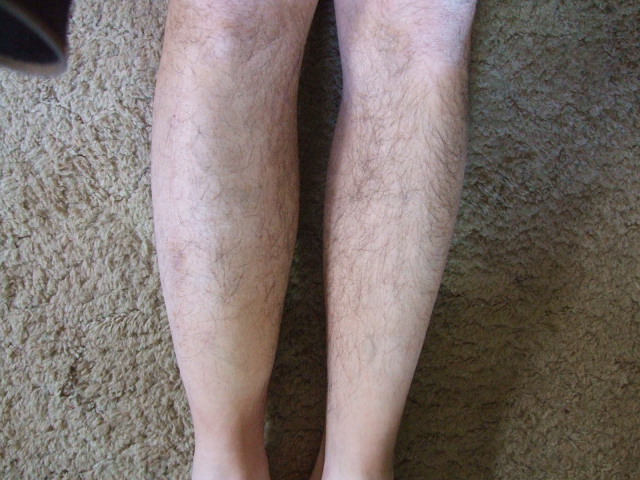
I've included new pictures of my wounds. There is a dent where the fourth bullet
hole was. My right leg is still bigger than my left leg. It still has a
lot less hair. At least it still works, huh?
3-06-09 The life of leisure isn't great for my health. I've been off work for 11 weeks and I've gained about 10 lbs. Worse yet my cholesterol has jumped up to 246. Now my doctor has put me on a low fat diet and wants me to exercise! I get winded pretty easily now, so I guess I'm going to have to get busy. I saw a video that everyone must watch. It was taken at a wedding in Iraq. first of all, I don't know what it is about people in that part of the world, but every time they want to celebrate something they shoot their guns into the air. Watch the guy, You see him rack the slide without removing the magazine first. This is the same mistake the DEA agent made in front of the classroom full of kids. I hope the guy survived. Oh, my doctor said a 92 year old patient of his shot himself in the leg. The doctor thought of me when he heard about it. The poor guy is in a nursing home now, he shattered his femur.
3-14-09 I recently got an email from a visitor (thanks Jason) about dry firing that has me rethinking the whole thing. He made several good points: That when someone dry fires, they are basically ignoring the rules. Assume the gun is always loaded, never point your gun at something that you don't intend to destroy, etc. It's hard for me to disagree. Since my injury (Have you noticed that I NEVER call it "my accident"?) I have become much more careful when dry firing. I remove all live ammo from the room and triple check the pistol to make sure it isn't loaded. When I'm done I put the pistol in another room and wait at least an hour before I reload it and put it back in my holster. It's not because I fear that I will reload while I'm dry firing, but it would be too easy to stop dry firing, reload and a little later decide I needed to work on some particular aspect of it and start dry firing again forgetting that the gun was loaded. I haven't done any real dry firing for a long time. I get plenty of practice at the range. What I HAVE been doing is practicing drawing from a holster, bringing the gun up quickly to acquire a sight picture on a target (releasing the safety as I do so) and firing at the target. Of course, the trigger finger is along side the frame until I actually get sighted in on the target. (You DON'T want to learn or practice drawing with live ammo even at the range! That would be a good way to end up with bullet holes in you.) I practice this to build up "muscle memory". .If you repeat an action the same way thousands of times, it becomes automatic.
What disturbed me when I thought about it was that I was teaching myself to automatically pull the trigger. I hesitated every time before pulling the trigger, but I still don't like the idea, so I won't do that any more. The idea was to get a smooth draw without pointing the muzzle at any part of me, including the other hand and quickly get the sights on a target. I don't need to pull the trigger for that. I'm seriously thinking about buying a blue gun to be completely safe. I DO think that one should practice picking up a gun, laying it down, etc so one can develop the habit of keeping the trigger finger along the frame and NOT on the trigger. You wouldn't believe how much it bothers me to see people with their finger on the trigger while moving the muzzle of the gun all over creation. It even bothers me when I see people (including actors portraying law enforcement) doing so on TV and in movies. If you decide to do it, follow my rules about live ammo and triple checking and ALWAYS keep it pointed in a safe direction, etc. And don't think just because it's become "automatic" that you don't have to THINK about what you're doing EVERY time you touch a firearm.
Thanks Jason, for getting me thinking about this. I owe you big.
6-19-09 I heard from another reader who suggested using an airsoft gun for dry firing. This would be much more realistic way of practicing than a blue gun. Thanks for the idea, Brian.
I've been retired for 6 months now. I've lost a bit of weight and am eating less food that is bad for me now. I've really settled into life without work. One odd thing is the number of times I go to the shooting range. I used to try to go every week on my day off in just about any weather. Now that I can go virtually any day, I'm a lot pickier now about when I go. In fact, I've only gone about once a month. I need to step this up in order to practice more often. One factor is the scarcity and price of ammo and reloading components. I actually have 5,000 cases now, many more than I've ever had before. Cases are the brass component that holds the powder, primer and bullet. It is the only reusable part of a round of ammunition. I also bought 5,000 bullets and 4 lbs of powder. My problem is buying bullets. The prices have skyrocketed. 1,000 bullets are up to $134.88 with a 4 - 6 week delay. I can't remember now how much I paid when I started reloading, but I'm sure it was less than half that price. Every month something else seems to come up that supersedes my need for bullets. Last month it was parts for my '71 MG Midget. Next month it will be a new hard drive for my computer and a hard drive docking station. I lost a 750 Mb drive recently, with no backup. OUCH. I am going to use a hard drive for backup and put the backup hard drive on a shelf. My foot is still giving me trouble, and probably always will. Not having to walk all day makes it better than it would be if I was still working though. Another reader, Reid, calls lingering pain a "stupid tax". I think that's a good term for it. A constant reminder of my stupid mistake.
8-2-09 One of the best things about doing this page is hearing from great people all over the world. The latest is Lazy Dave. He lives in Australia and is into Single Action Shooting. I thought handguns were outlawed down under, but it is possible to have them. You just can't carry them to actually DEFEND yourself. Anyhow, he recently bought a 1911. He can say what he had on his mind better than I ever could, so here is a quote from his email (used with permission)
"Jason and you both hit the nail pretty well when you talk
about dry firing and muscle memory. I have been shooting
Single Action for the last
couple of years, doing my dry firing drills in my shed with all care and
consideration for safety (which stepped up after finding your website), a while
ago I picked up a Remington Rand 1911a1. I had been trained on handling both
single and double action wheel guns and semi-auto pistols when I did my course
to obtain my handgun licence. It was only after starting to handle the 1911 and
going through the handling routines that I realised, like you, I was creating a
memory during my drills of: see, draw, sight, fire, see, sight, fire and
holster. At no point did I ever practice the safe decocking, unloading, clearing
and checking as a drill on the bench.
With firearms we probably do the clearing procedure so much more often than
firing that it seems a little bit silly to practice it as a drill, we use drills
to build speed and reliability into our mind and body so that conscious thought
will be able to be used for situational decision making. What I am talking about
is using the same technique to create a slow, reliable, methodical and conscious
memory for every time you go through the clearing procedure."
He's absolutely right. Anyone that owns a firearm should practice rendering it safe over and over again, being very careful to do it in the safest way possible until "muscle memory" builds up. Even after this is done, that is still no reason to go on "auto pilot" when handling a firearm. That is what I did wrong. I had done it so much that I incorrectly assumed that I would automatically do the right thing. Kind of like fastening my seatbelt or using my turn signal while driving. I mistakenly believed that once it became automatic, I didn't need to think about it any more. Boy, was I ever wrong and I paid for my foolishness in the long run. You should practice making your firearms safe (empty) until it becomes natural and automatic, but you also MUST think and pay very close attention every time you do it. If someone hands you a gun, you should insist that they clear it and show you the empty chamber first. You shouldn't pick up a gun that you don't know how to unload and clear.
Here are my suggestions for the proper way to do it. I'm dealing with semi autos here, and it doesn't really matter if it's a pistol, a rifle or even a shotgun.
1. ALWAYS keep it pointed in a safe direction. Safe means in a direction that nobody would get hurt if the gun fired.
2. ALWAYS keep your finger away from the trigger. Keep it straight and laying along the side of the frame unless you are aiming at a target and mean to pull the trigger.
3. DROP THE MAGAZINE FIRST. If you don't, you won't be unloading the gun.
4. Pull the slide or bolt back. If a round is in the chamber it should eject. LOOK INTO THE ACTION AND SEE THE EMPTY CHAMBER. The best thing to do here is to leave the slide or bolt locked back. If you want to close it for some reason, WATCH THE CHAMBER AS YOU RELEASE THE SLIDE OR BOLT to make sure it is remains empty.
5. Even after you KNOW it's empty, keep it pointed in a safe direction and keep your finger away from the trigger. You may be thinking "WHY? IT'S EMPTY." Well, that's not the point. If you don't worry about where it's pointed when "It's unloaded", eventually you will make the mistake of pointing it in the wrong direction when it's loaded.
Most of the negligent discharges I have seen or read about - including the DEA agent that shot himself in the foot while in front of a classroom full of children, happened because they racked the slide before dropping the magazine.
Revolvers are a bit simpler. Obey steps one and two above. Unlatch the cylinder and swing it open. Put your fingers (as many as will fit) through the frame where the cylinder usually sits. Eject the cases or rounds in the cylinder. Leave the cylinder open like this if possible. If you close the cylinder, look at the back of the cylinder to make sure all chambers are empty before closing the cylinder. NEVER look into the front of the cylinder to see if the gun is unloaded. That's just stupid.
Don't let yourself become so comfortable that you do this without thinking and concentrating on what you are doing.
9-9-09 I got a Doppler done on my graft last week. It's been a year since I last had one. It came out fine and I will have another one in a year. They are watching for a blockage and the only I would know there is a blockage is with this test. The doctor told me to start taking an aspirin every day. I already take a fish oil capsule every day, which also thins out my blood, so I should be fine unless I start bleeding for some reason. <g> I don't plan on doing that. I took the advice of my good friend Doyle and took a knife to my shoe. It gives my foot more room where I need it and it has helped somewhat. My foot still bothers me and always will. It's a constant reminder to be careful when handling firearms.
11-16-09 I finally did something I've been wanting to do for years. I built a recumbent bike.
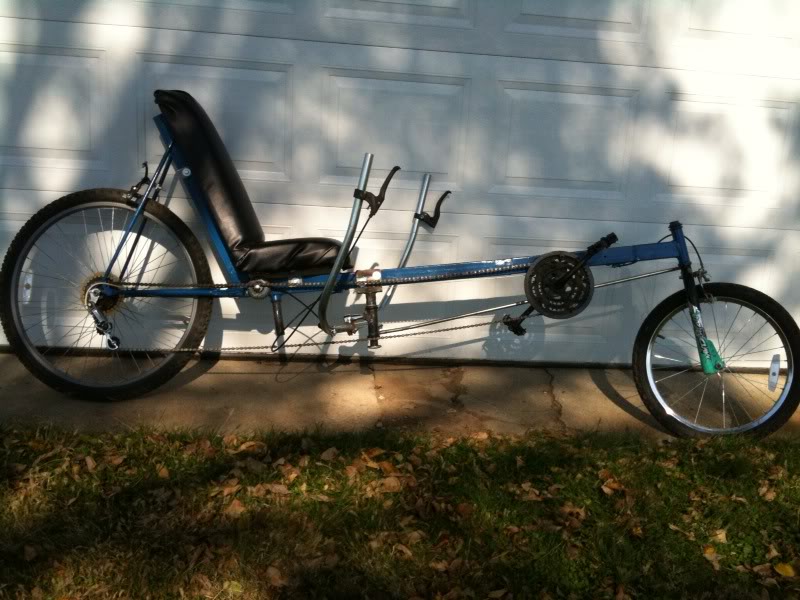
This bike is a tank. It weighs 54 lbs.
Of course, my foot wasn't about to cooperate. I've ridden it some and my foot is acting up. My heel is really sore and my foot FEELS like it is really swollen, when it really isn't swollen at all. I have found that bicycle shoes have very stiff soles and the shoes that I wear (the only pair I have found that I can wear, and then only after cutting some stitches) have very soft soles. I really need to figure it out because my legs have gotten pretty weak since I retired. They are so weak from sitting so long that I could only ride it about 1 1/2 miles. It was quite a challenge learning to ride it, too. It's a whole new type of balancing.
1-19-10 It's been two years now. I read the entire page, just like I did last year. It's surprising how much I had forgotten. It's still hard for me to read the first part. Things are going well in retirement. I haven't been able to do much reloading or shooting this year. I loaded 2,000 rounds right after I retired and planned on loading 10,000 rounds and keeping most of those back "just in case". I had 5,000 primers and 4 lbs of powder, and plenty of cases but I never seemed to have the money to order more bullets. I'm down to about 300 rounds now. My new hobby is keeping me busy though. I converted my dad's old exercise back to replicate the seating position of the Warrior racing trike I'm building now. My welding is not the best, but I go to great pains to make them strong, if not pretty.
This photo is what I am shooting for.
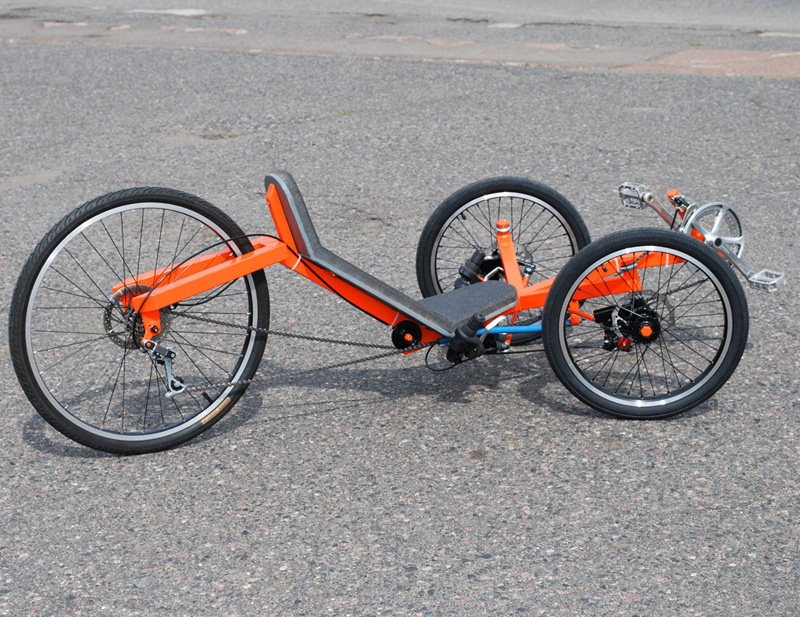
This project is MUCH more complicated than my first bike. The steering geometry and steering linkage is going to be a real challenge.
1-30-10 I lost my dear, sweet wife of 37 years this morning. She died in her sleep.I cannot put into words what a shock it was for me when I found Candy. She had not been in good health for a long time. She was on a total and permanent disability since 1988. She suffered from depression as long as I knew her as well as stomach problems. At first it was called a "nervous stomach", later irritable bowel syndrome and finally Crohn's Disease. A few years ago she got approved for Remicade infusions. This medicine is VERY expensive, but between what the insurance paid and the write downs that the hospital accepted, she was able to get it. This really helped her with her Crohn's, but it also lowered her resistance. For the last couple of years she had felt a lot better. She still had bad days, but she also had good days. About the end of last year she made some decisions about her health and her outlook and was doing much better. We were having a great time together, playing cards and doing things we'd been unable to do for years. It looked like her Crohn's was going into remission. I was a happy guy. Finally, everything I had worked for all of my life was working out and we were looking forward to a long, happy retirement together.
In mid January she slipped on the ice while walking her dog and bruised up her ribs and hip. She got a swine flu shot at about the same time. About a week later, she thought she had the flu. She called her doctor, but didn't go see her. On January 29th we went to bed about midnight and all seemed well. She died in her sleep early the next morning, but I didn't find out until 10:00 when I went to wake her up.I paid for a private autopsy and found that she actually had pneumonia Her lungs weighed twice what they should have.
8-2-10 Some of my readers have been writing to me, asking me how I'm doing. I really appreciate it. One encouraged me to update this page and so here I am. Thanks, Paul.
Those first few days and weeks were unbearable to me. After three weeks I decided to go see my doctor. I was unable to sleep and of course, was very depressed and anxious. He gave me Prozac and Ambien to help me sleep. These really helped me out and after a couple of months I tapered myself off of them.
I'm getting along okay now, I guess. I miss Candy dearly, but there's nothing that can be done about that. Life goes on. I sold the Grand Am she inherited from her mom to a friend and used the money to buy a small pickup and as Honda 250 motorcycle. Unfortunately, I had an accident with that, which could have been much worse than it was. Another friend decided to sell his 1974 Harley Sportster, so I bought that, too. I had a Triumph motorcycle back in the late 70's. Nine people were killed on motorcycles that summer in my town, so I sold it. I feared leaving Candy behind more than anything else, so I never thought about getting another one. Now that she's gone, I don't have to worry about that any more. I don't fear death nearly as much as I had before. I'm not looking forward to it by any means, but it doesn't really scare me any more either.
I've never been "on my own" in my life. I was 16 when Candy and I met. It's new to me, but I'm adapting to it. It's weird not having ANY kind of a schedule from day to day or even from hour to hour. I had trouble getting motivated to even get out of bed for a long time, but I'm getting past that, too. I try not to look back or forward too far. It's just too painful. I'm still reloading and shooting, of course. I ride my motorcycles as much as possible, mostly on country roads. I still listen to conservative talk radio and spend a lot of time on Facebook. If you want, look me up on there and add a note mentioning this site.
1-19-11 Today is the third anniversary of my negligent
discharge. Normally I read through my entire web site before I do my yearly
update, but I just can't do it this year. It would be too painful. This is
because the 30th will be the one year anniversary of my wife's death.
I'm doing okay. I started taking Prozac again about a month ago, and I think
that helps a lot. I keep busy and live in the present moment. I never was one
for living in the past or looking back.
My foot still bothers me a lot. That's weird, because I don't walk on it much
any more and I used to walk 10 miles per day when I was working.
I have several pairs of shoes now. Each pair seems to hurt my foot, but in
different places. I never wear shoes while in the house. The weird thing is,
even wearing socks around the house is starting to bother me. It's hard to
explain, but my feet feel different with socks on - like not the same as each
other. The toes on my left foot feel the sock, but the toes on my right foot
don't. The problem is, when I take my socks off, my feet are cold, so it's a no
win situation.
The ball of my foot at the base of my big toe hurts most often, followed by my
big toe, the the base of my little toe, then the length of the "outside" of my
foot - the right side of my right foot. I long ago gave up on my nerves ever
growing back. I refer my right foot as my "corpse foot" because it feels dead
when I walk on it.
I didn't go back for my doppler last fall. My insurance doesn't pay much on it,
and being on a fixed income, it just isn't worth it to me any more.
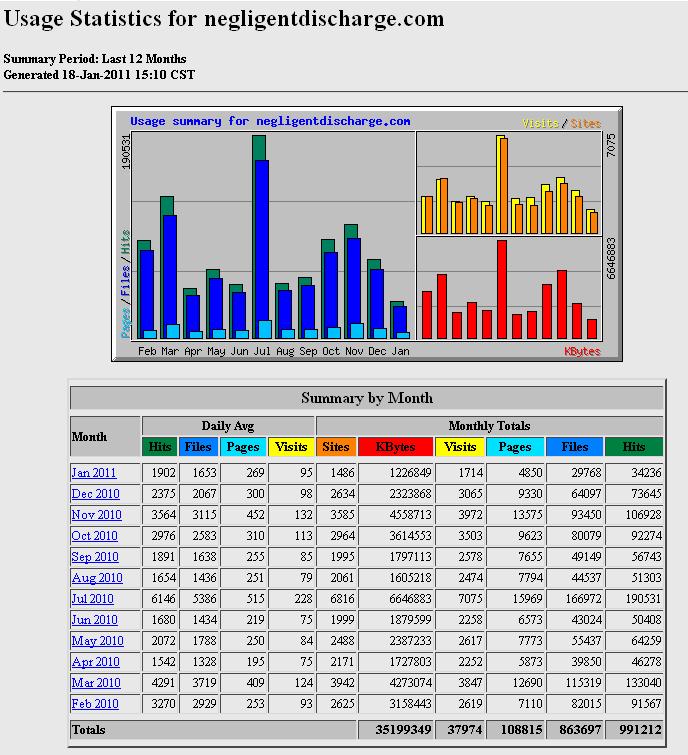
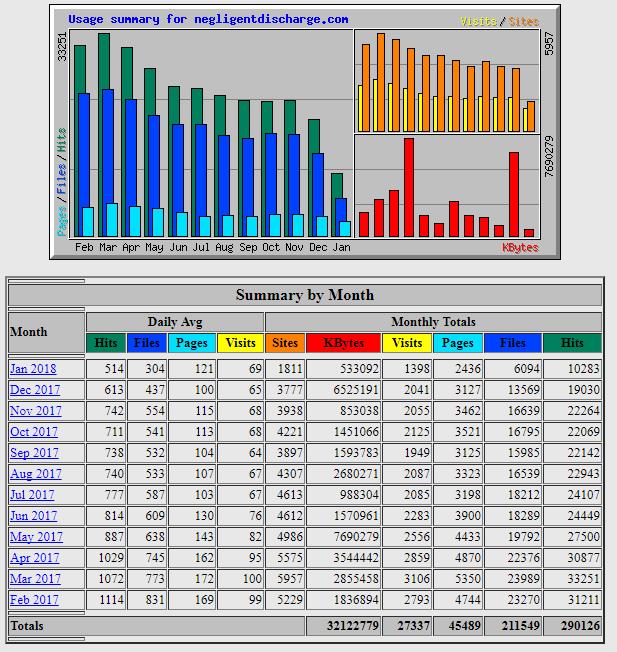
Here are the stats for my web page for the last year. As you can see, I got a
big bump in July for some reason. Maybe a negligent discharge was in the news or
my page was mentioned in a site with a lot of visitors.
I still get emails from visitors, from all over the world. I have heard a lot of
sad stories, but many more near misses or just messages from kind people wishing
me well. I really appreciate each and every one.
I still carry my beloved Rock Island every day, every where. I have several
1911s, in .45 ACP, 9mm and .22. What can I say, I'm hooked!
5-16-11 Another update. I haven't done much more on my recumbent trike. I guess I lost interest in it.
I bought yet another motorcycle, a 2011 Harley Sportster 48.
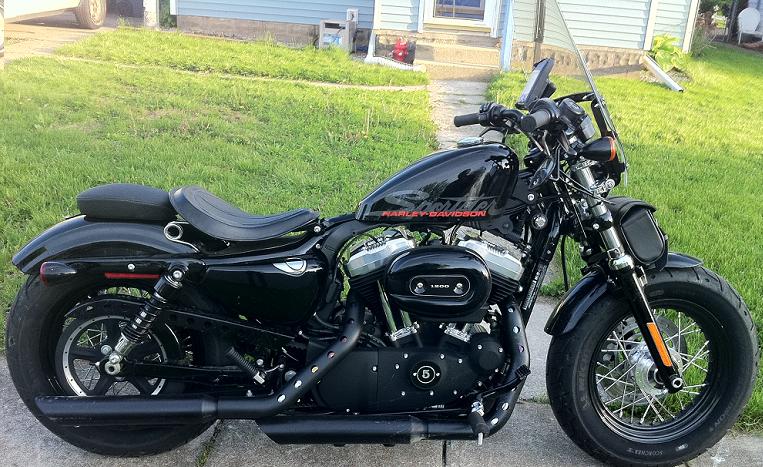
Here's my '74 Sportster
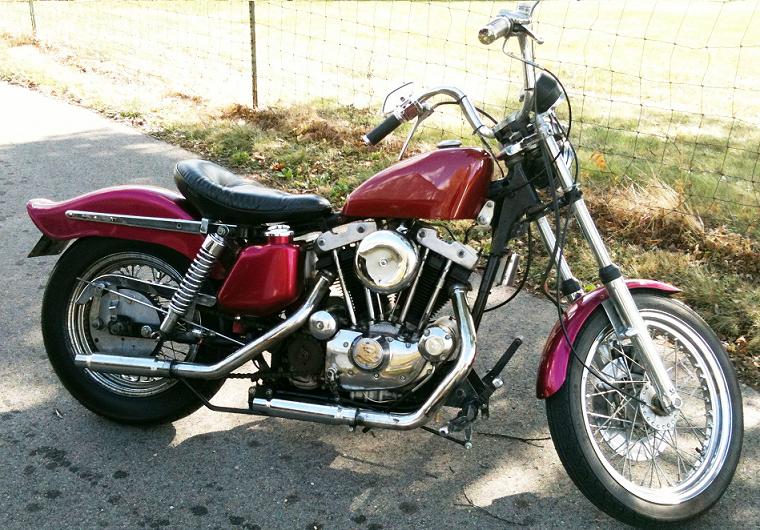
I REALLY need to sell my Honda and MG Midget.
1-19-12 Another year has passed since my ND. Not much has
changed in the last year. I ride my new Harley whenever the weather allows.
Aside from one round trip of about 550 miles, the furthest I ever gotten
from home was about 60 miles. I still managed to put over 6,500 miles on it.
Other than that I spend a lot of time on Facebook, listening to talk radio and
watching TV.
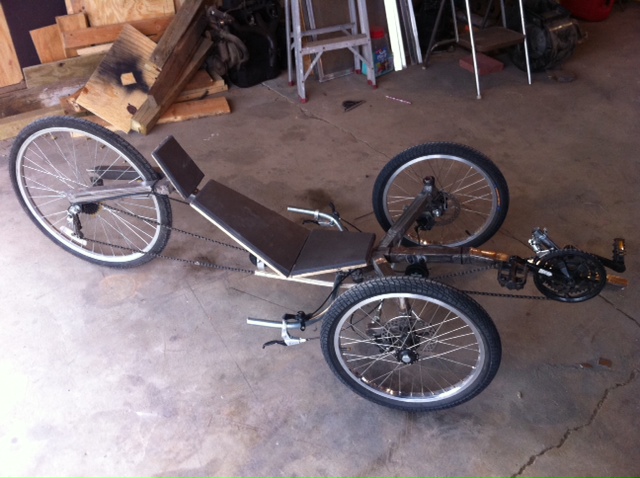
I did manage to finish my recumbent trike, although I need to take it all apart
and paint it. I can't ride it very far, because I'm too out of shape (see above
for why. lol)
I finally sold my MG. I lost money on it, but just wanted it out
of my garage.
By the end of the month, I'll also mark 2 years since Candy died.
I managed to get my heart broken three - count 'em three times in the last year.
All by the same woman. It wasn't her fault, though. We just wanted different
things in life and I am slow to learn. We're still friends.
So, long story short, there is a little less joy and a little less sorrow in my
life as I wake up each day. Life goes on.
8-30-12 My life has taken a decided turn for the better. I've been riding my 2011 Sportster a LOT. About 8,500 miles this year and I haven't been more than 80 miles from home. Better yet, I met a wonderful, amazing woman who is as crazy about me as I am about her. It seems like we have known each other and been together forever. .Needless to say, we are both happier than we ever thought we would be again.
As for my foot and leg, they are unchanged. I take Lyrica for my nerve pain. My foot bothers me, but it isn't anything I can't live with.
1-19-13 It's been 5 years! It seems like a lifetime ago. If it weren't for my constant reminder of my foot, it would seem like it didn't really happen. My foot and leg are unchanged, of course. I consider that good news at this point. My foot is never going to be normal again, and it and my leg could get worse.
Elaine and I have been together for 6 months now and plan to be together as long as we live. Life is good.
1-19-14 Another year has passed. Nothing terribly eventful has happened this past year. Elaine and I are still together, and plan to be together until the end. I put negligent discharge into Google, and this site is number 2 on the list, right under Wikipedia.
Here are the stats for the site:
I occasionally hear from visitors, and I really appreciate hearing comments about the site. I don't like to hear that others have had similar experiences, but am always willing to share their stories here, anonymously, if they wish.
Have fun, but BE CAREFUL!
1-19-15 - It's been 7 years since my ND. It seems so, so long ago. No change in my foot, leg or health other than being more out of shape then I was a year ago. lol Elaine is still with me, we're still as happy as two people can be.
1-19-16 - Another year gone by. Nothing new, just enjoying my retirement and life with Elaine.
1-19-17 - It's been 9 years now. No changes in my foot/leg. Same old same old. Elaine and I are still happily together. I have gotten into multirotors (drones). I built a large hexcopter and a small racing quad. I want to get into FPV racing - using video goggles and a camera on the quad. I have flown a bit with FPV, but a couple friends and I want to start doing it this spring.
11-15-17 - I usually update this page every year on January 19, but I neglected to update it in April for a really big life change. Elaine and I got married! The only reason we hadn't before was I would have lost quite a bit of money per month, but when I turned 62, it happened anyway so there was nothing standing in our way. We are happier than any two people should be allowed to be.
1-19-18 Ten years! Wow. It seems like a lifetime ago. Everything with my foot and leg are the same as they have been for years. Nothing new there. I'm still a happy newlywed! Here are the stats from last year
2-20-2018 Here is a study done about negligent discharges from December 2014 through November 2016. I found it very interesting. There is a link in the article to get all 300 stories.
1-19-2019 Eleven years now. My feet are bothering me more as time goes on. My left one had neuropathy, too. I don't know how that happened. My right foot usually feels like I have a shoe on, even when I don't. I can't find a pair of shoes that doesn't hurt it. Sometimes, my leg feels weird almost up to my knee. It is hard to describe - it kind of tingles and is kind of numb. My doppler test came out fine, of course, so there is nothing wrong with my circulation.
1-19-2-21 I guess I forgot to do an update last year. This has been pretty uneventful year, for the most part, until December. My daughter went to ER with trouble breathing and tiring easily when moving around. Even though she tested negative two days earlier, she tested positive for Covid and she had heart failure. They didn't have an ICU room in either of our hospitals, so they sent her down to Indianapolis. She was in ICU for 3 days and in the hospital a total of 5 days over all. The heart failure was due to fluid buildup in her body. They don't know what caused it. She is fine now.
I developed a cough on December 18. I would get coughing fits if I inhaled too deeply. That was my only symptom for about a week, but then I got feeling worse and worse. I had a phone visit with my doctor's assistant on the 30th. She set me in a Z Pack and a steroid. That fixed me up pretty quickly. I also had to get tested and I had Covid, too. Them my wife, Elaine, got sick. Her blood oxygen saturation got down to 77. She went to the ER on January 7th an is still in the hospital. She had Covid and pneumonia.
Oh, but I'm not done yet. I was using an angle grinder which had fallen off of a table. The cutting wheel broke in half when I started it up. Half of the wheel cut a very deep gash in my middle finger of my left hand. It also chipped off a piece of bone in my middle knuckle joint. The piece that holds my tendon in place. It got infected. I had surgery to fix that up and should have surgery to actually fix my finger the first week of February.
I have neuropathy in both feet now. They are gradually getting worse.
Oh, well, I figure I'm lucky to be alive!
1-19-23 Fifteen years now. Nothing much new going on. Still happily married and still having trouble with my foot. Those two things will never change
1-19-26 Eighteen years now. I'm still plugging along. Getting along pretty well, still happily married. I can't complain.
Email me if you have questions or comments
